Commercial real estate website design for portfolios that lease
Tenant-rep brokers, tenants and investors judge a portfolio by how quickly they can find the facts. We build commercial real estate websites that put specs, availabilities and contacts one click away, and rank for the buildings you own.
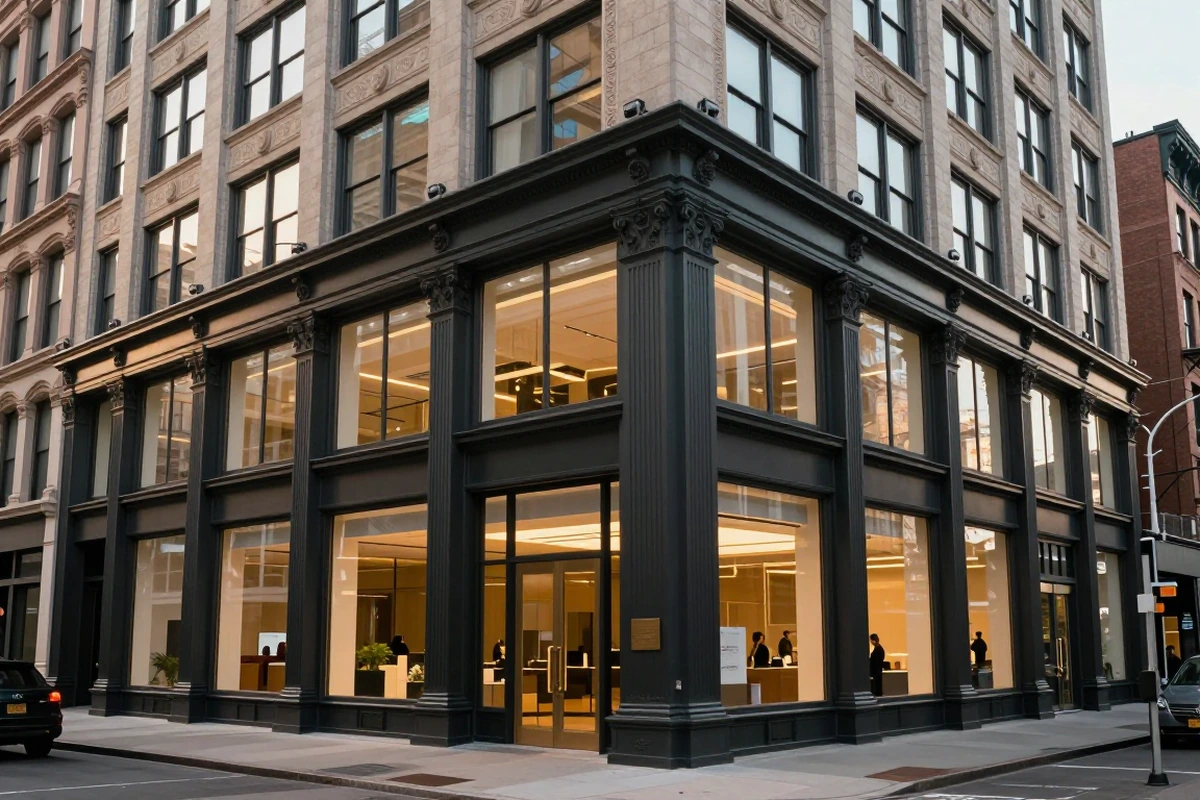
Case study · Commercial Real Estate
PEP Real Estate: 10x Growth in Qualified Leads for SoHo Portfolio
- Annual Impressions
- 146K+
- 12-month search window
- Visibility Growth
- +308%
- search impressions
- Page-One Rankings
- 10+
- target SoHo queries
- Lead Growth
- 10x
- qualified organic inquiries
What ships
Each engagement is scoped to your properties and market. These are the pieces most commercial real estate websites programs include.
Portfolio architecture
Site structure for buildings, submarkets, property types and investor or company content.
Building page template
Hero media, key specs, amenities, transit, stacking or floor plans, availability table and broker contacts.
Availability management
An editor your leasing team can update in minutes, or a feed from the system you already use.
Portfolio map and search
Filter by submarket, size, type and availability, built to stay fast on a phone.
Downloadable collateral
Flyers, floor plans and offering memoranda, optionally behind a short form for tracking.
Investor and company pages
Track record, leadership, ESG or sustainability reporting and press, where they support your goals.
Search foundation
Stable building URLs, structured data, redirects from the old site and fast templates.
Inquiry tracking
Every tour request, call and download tagged by building, suite and channel, routed to the right broker.
Who a commercial site is really for
Most traffic to a commercial portfolio site comes from people doing homework. A tenant-rep broker is building a shortlist and needs square footage, floor plates, asking rent and photos. A tenant's office manager wants to know about transit, lunch and bike storage. An investor or lender wants the portfolio, the track record and the people. Sometimes a job candidate is looking too.
A good commercial real estate website serves each of them without making the others wade through irrelevant pages. That starts with information architecture: buildings and availabilities up front, company and investor content one level down, and every building page answering the questions a broker asks on the first call.
The building page does the heavy lifting
Each building gets a page designed around the decisions people make there. The availability table is the center of it: suite, size, floor, availability date, asking terms if you publish them, and links to floor plans. Next to it sit the broker contacts and a short tour request form.
Around that core we place what differentiates the building: photography, a short description written about this property, building specs, amenities, sustainability certifications, transit and neighborhood context. Everything a broker would otherwise request by email is available to download.
- Specs people compare: size, class, year built or renovated, floor plates, ceiling heights, loading, power, parking.
- Availabilities that update the same day a suite leases or comes back.
- Downloadables: floor plans, flyers and stacking plans, with optional light gating for tracking.
- Direct contacts: the leasing broker's name, phone and email on the page, not only a generic form.
Keeping availabilities current
Stale availability data is the fastest way to lose a broker's trust. We give leasing teams an editor built for exactly this job, so adding or removing a suite takes a minute and does not require touching page layouts. Where your availabilities already live in another system, we connect a feed instead.
Leased suites disappear from the table, but the building page stays. That keeps the URL stable, preserves its rankings and means a broker who bookmarked it last year still lands somewhere useful.
Designed for the quality of the asset
A trophy office building, a flex industrial park and a neighborhood retail center need different visual languages. We design around the asset: photography direction, typography and layout that match the building, with restraint where the architecture should speak for itself. The result should feel like it belongs to your portfolio, not to a template gallery.
Performance is part of that quality. Large photography and maps are loaded carefully so pages stay fast on the phones brokers use between tours.
Built to rank for your buildings
When a broker searches a building name or address, your page should be the first result. Stable URLs, unique copy per building, structured data and a clean internal link structure make that likely. Submarket pages then extend reach to broader searches like "office space for lease in Midtown South."
This is the same approach that gave PEP Real Estate's SoHo portfolio 146K+ annual search impressions and 10+ page-one rankings for target queries. See the PEP Real Estate case study, or pair a new site with an ongoing commercial real estate SEO program.
What to prepare before a project
The projects that move fastest start with a building list, current availabilities, the best existing photography and floor plans, and a named person on the leasing side who can answer questions. We handle the rest, including gap photography and copy, and we publish a detailed checklist in our commercial real estate website design guide.
Investor, company and recruiting content
Commercial firms often need the same site to support leasing, capital raising and hiring. We structure these as separate sections with their own entry points so tenants never wade through fund information and investors find the track record quickly.
Investor content typically covers the strategy, the portfolio with key metrics, leadership and a secure contact path. Company content covers history, values and press. Recruiting content shows what it is like to work on your team. Each section links back to the buildings, which remain the heart of the site.
Integrations and ownership
We connect the site to the systems your team already uses: CRM for inquiries, availability exports where they exist, calendar booking for tours and email for broker updates. Where a marketplace or listing service provides an export, we can use it to keep availabilities in sync, but the building pages stay on your own site and domain.
You own everything we build: the domain, the content, the code and the analytics accounts. That matters in commercial real estate, where portfolios are bought, sold and recapitalized, and a website needs to move with the assets.
Updated September 29, 2026 · Michael Berardi, founder
How we work
- 01
Discovery
Leasing, marketing and ownership interviews, a building inventory and a review of how brokers use your current site.
- 02
Design
Building page, portfolio and home templates designed with your real buildings and photography.
- 03
Build
CMS, availability editor or feed, integrations, copy, redirects and speed testing on a staging site.
- 04
Launch and support
Go-live, training for the leasing team, tracking checks and 30 days of refinements.
Pricing
Published starting points, so you can tell early whether we fit. Every proposal is fixed-scope and written after the review.
All pricingFixed-fee project
From $12,000
Scope depends mostly on the number of buildings, the availability workflow and integrations. Portfolio sites with 5-20 buildings commonly land between $18,000 and $45,000. See all pricing.
Read before you hire anyone
Commercial Real Estate Websites: common questions
Can our leasing team update availabilities themselves?
Yes. The availability editor is built for leasing staff: add a suite, change a size or date, mark it leased. Changes publish immediately without touching page layouts.
Can the site pull availabilities from another system?
Often, yes. If your availability data lives in a system with an export or API, we can sync it. We confirm what is possible during discovery before quoting it.
Should we gate floor plans and flyers behind a form?
Usually not the core floor plans, because brokers expect quick access. Offering memoranda and detailed packages are good candidates for a short form, which also tells you who is interested.
Do you handle photography?
We direct and coordinate architectural photography and drone work where needed, and work with your existing library where it is strong enough.
What happens to our current rankings?
We redirect every indexed URL from your old site to its new equivalent and keep building URLs stable, so existing rankings and links carry over.
Do you build sites for brokerages too?
Yes. Brokerage sites add broker profiles, listing pages, market reports and recruiting content on top of the same building and availability system.